Sunday, April 3, 2016

Saturday, April 2, 2016
Charis Chan Suspended from Competition by CrossFit Games
While she hasn’t been officially sanctioned or suspended by the U.S. Anti-Doping Agency (USADA), on April 1st the CrossFit Games website announced Charis Chan was suspended from CrossFit competition for the 2016 season.
It looks like the 29 year old’s 2016 Open results have already been removed from the California leaderboard. Though Chan appears to be fighting her suspension after a rumored positive test at the 2015 American Open Championships (which the CrossFit Games post references), this step ends Chan’s bid to compete at Regionals and potentially beyond.
Chan has twice competed at the CrossFit Games Regionals, and last year she won Event 7 in a stacked California Super Regional, though she missed out on Games qualification by several points.
She’s is also the American Record Holder for the snatch in the 53 kilogram category, hitting an 86 kilo lift at 2015’s American Open in Reno. While USA Weightlifting still has that lift listed as the weight class record, that could change if her suspension is upheld.
Charis Chan’s suspension from the 2016 Games season is the second publicized suspension to be handed down from CrossFit HQ this year, joining Natalie Newhart, whom CrossFit suspended on March 18th.
Below is a video of Chan’s American Record lift, courtesy of Hookgrip.
The post Charis Chan Suspended from Competition by CrossFit Games appeared first on BarBend.
from BarBend https://barbend.com/charis-chan-suspended-competition-crossfit-games/
Friday, April 1, 2016
Your Favorite CrossFit Games Athletes Were Once Mere Mortals
About a year ago, a video of four time CrossFit Games athlete Julie Foucher’s early barbell workouts surfaced on the internet. She’s wearing a bright yellow oversized tee shirt, bike shorts down to her knee, and tennis shoes. She goes for what looks to be a 65 or 75lb clean, sits it down, and pushes the bar forward with an air of “Oh my God, I am so bad at this.” Basically, she looks like all of us did at the start of our fitness careers.
Of course, most of us did not go on to compete at the CrossFit Games, podium twice, and then go on to have a Kerri Strug moment at the 2015 Regionals. But it does make you wonder, what did some of these Games level athletes look like when they first started? We did a little digging and found out.
The CrossFit Games of 2007, 2008, 2009, and even 2010 looked far different than their contemporary counterparts. While winning one of the early Games is certainly a huge physical accomplishment, the level of overall strength and skill was predictably much lower. For example, Annie Thorisdottir famously got her first muscle up at the 2009 CrossFit Games, and went on to win what the Games in 2011 and 2012. She seems to have the hang of them now.
Eight times Games athlete and CrossFit Darling Jason Khalipa snatched a rough looking 205lb at the 2009 CrossFit Games, but by 2014, things had greatly improved.
Mat Fraser, 2014 and 2015 Games Runner up, dreamed of an Olympic Weightlifting career, but was derailed by a major back injury. Six weeks after surgery he had to start over with 88lb squats. (Note: The first few minutes of this video are NSFW.)
With fewer tattoos — and fewer muscles — the still badass Christmas Abbott PR’d her clean and jerk at 140lbs at the 2010 Sectionals. These days, a 175 power clean & jerk is no problem despite that 53kg frame.
Chyna Cho qualified for the 2010 CrossFit Games and has since gone through a radical transformation. One week ago, she made a 145lb (we think) snatch complex look easy, but here she is in 2010 during Amanda, making 95lb snatches look…well…pretty hard.
But of course, there’s always one oddball in the group who was just a freak athlete from the beginning. Chris Spealler was crushing workouts as early as 2008, as evidenced by his 2:05 Fran completed in a globo gym. Props to the guy in the background who just kept on keeping on with his machine assisted dips.
The post Your Favorite CrossFit Games Athletes Were Once Mere Mortals appeared first on BarBend.
from BarBend https://barbend.com/crossfit-games-athletes-when-they-were-mere-mortals/
Why Fitness Athletes Should Focus on Hypertrophy
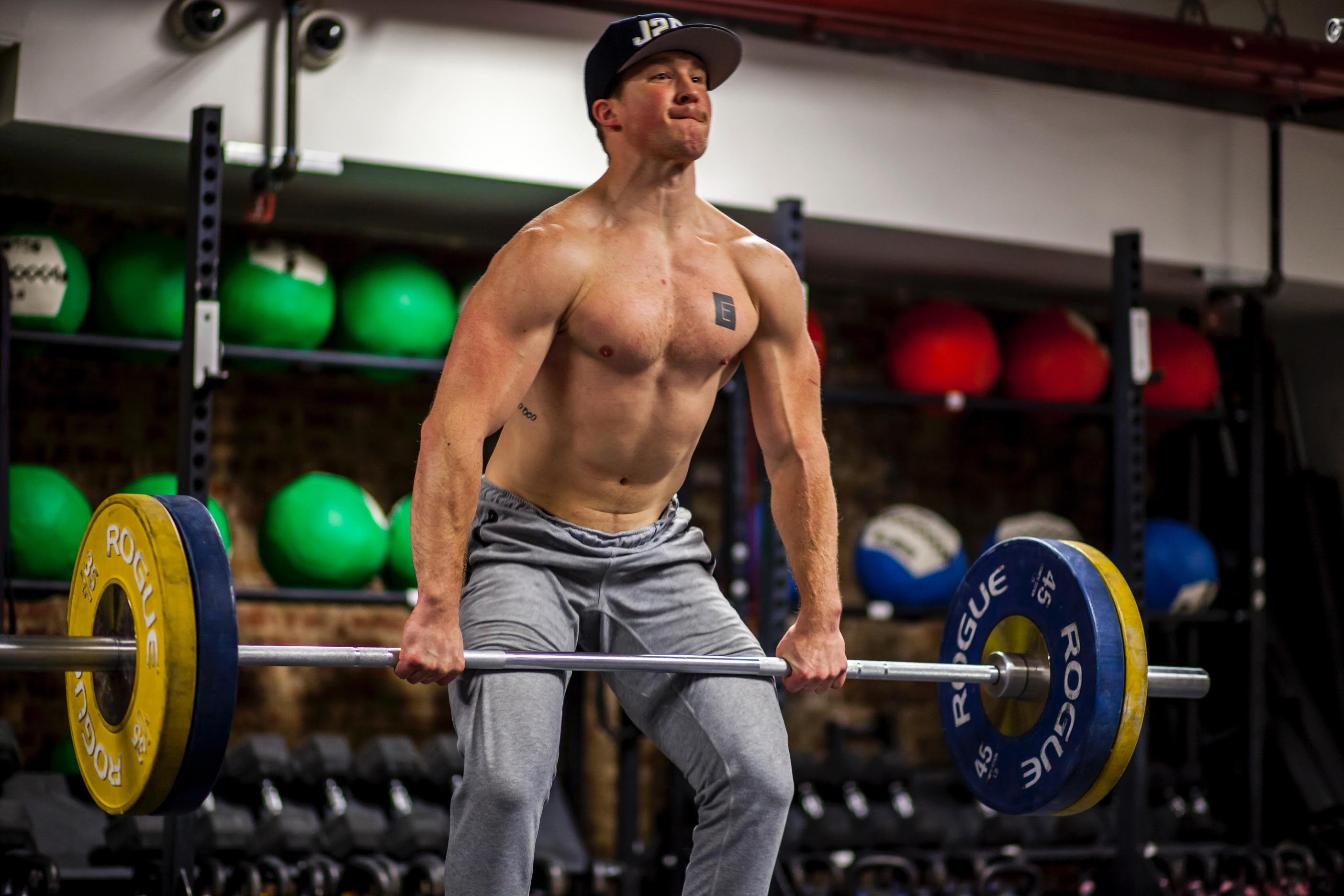
Mike Dewar, image courtesy Lisa Haefner
Like it or not, hypertrophy training (sometimes only seen as bodybuilding programs) can be very beneficial to fitness athletes and CrossFitters, possibly even necessary for long-term muscular growth, strength gains, increased athletic potential, and injury resilience.
Most of us are very familiar with standard bodybuilding programs: Leg days, bicep curls, and super sets. What many fail to see is that the science behind the training regimens of bodybuilding greats Arnold Schwarzenegger, Jay Cutler, and Ronnie Coleman can improve fitness performance across the board.
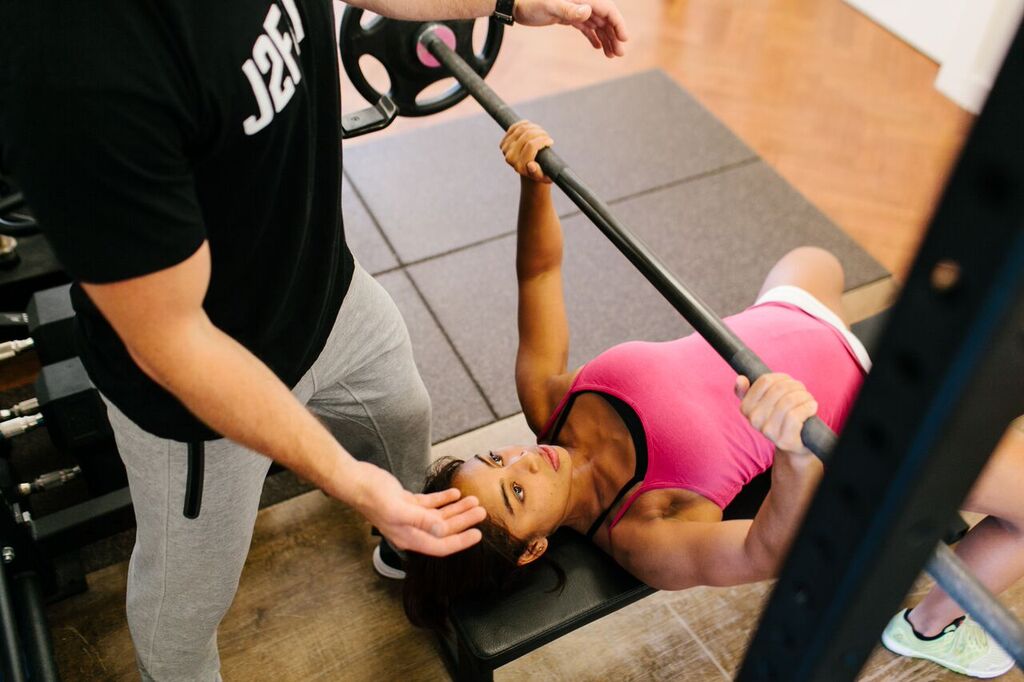
Bench Press Spotting
The Science of More Muscle
Muscular hypertrophy is the process of muscle tissues growing in diameter (size), resulting in a plethora of beneficial performance outcomes:
- Increased muscle fiber size: If you have to muscles with all other things the same, just one is “bigger”; bigger muscles are (generally) stronger muscles.
- Increased explosive strength and power capacity in the lower extremities: The increase in muscle fiber alignment and growth leads way to increased power production and fore development when these newly formed muscles are trained explosively.
- Increased work capacity: Multiple research studies have shown improved work capacity and performance improvements in cyclists, runners, and other athletes following a heavy strength training regimen.
- Few (if any) detrimental effects on endurance capacity: Research suggest that 12-weeks of heavy resistance training has no significant effect on endurance capacity in athletes.
- Decreased body fat: The more muscle you have, the higher your metabolism is. Swapping 1lb of fat for 1lb of muscle could help you burn nearly 4-6 additional calories per day/lb. You do the math…
- Increased fat oxidation and glucose sparing: This is critical for high intensity sports and WODs. As you train above your ventilatory/lactate threshold (roughly 75-80% of Heart Rate Max in trained adults), your body shifts to use glucose (sugars found in the blood and muscle tissues) for energy. Unlike stored fat, glucose stores are not finite, therefore the longer you can forgo using those stored glucose, the better you will be at performing high power and force output exercise.
- Increase in fast twitch (type IIa and IIb) muscle fibers: Not surprisingly, research shows that high intensity loading (60% RM) produces greater development of fast twitch muscle fibers when compared to lower intensity (30% RM) training.The fast twitch muscle fibers reign supreme in nearly every athletic endeavor, except long endurance training (ultramarathons, marathons, centurions. etc). The properties of fast twitch muscle fibers will promote optimal performance foundations.
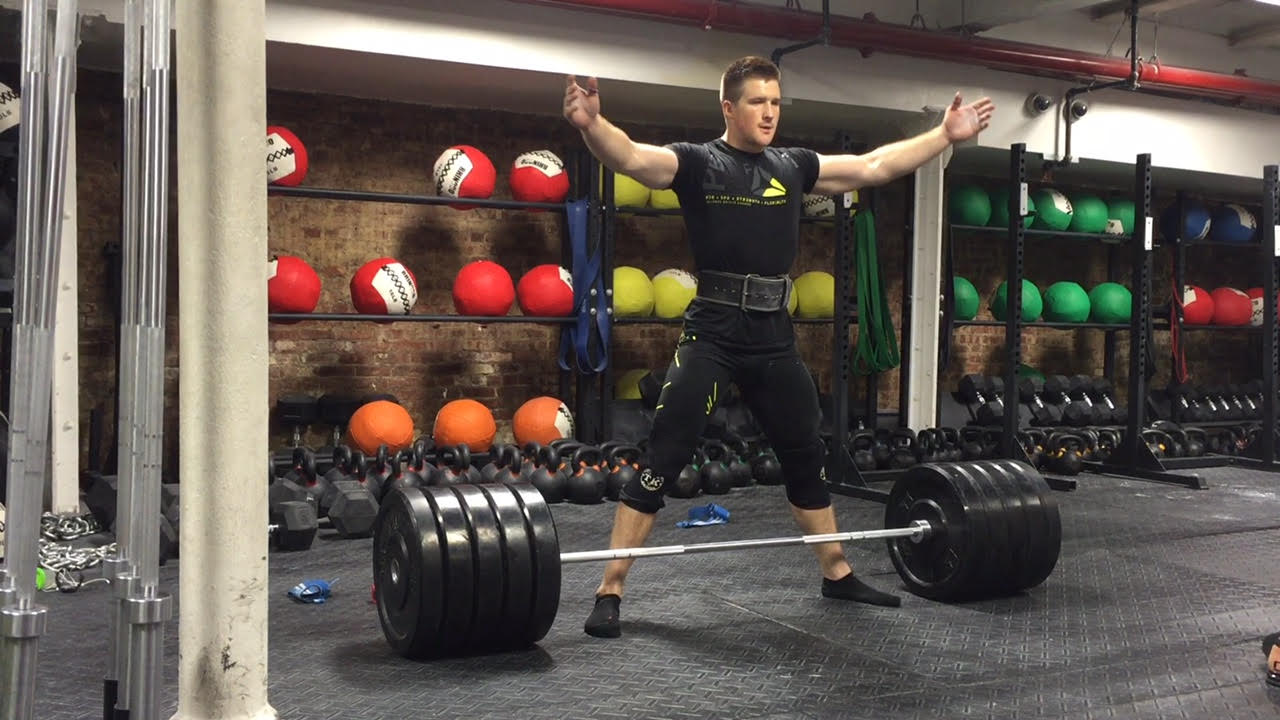
Mike Dewar Sumo Deadlift
When To Do A Hypertrophy-Based Training Cycle
Every new macrocycle (in this case, yearly program cycle) should start with a foundational hypertrophy and general physical preparedness phase. Following the competitive fitness season, a few training cycles (4-12 weeks) can be devoted to hypertrophy based training to promote:
- Repair their central nervous systems: The high demands of a sports season (Open workouts, etc) can wreak havoc on the neuromuscular system if not allowed to recover from the high stress of competition. Athletes, oddly enough, are more susceptible to overtraining and detrimental long-term plateaus if not careful during post competition seasons, as they are closer to their genetic potential. The close to that potential, the easier it is to overshoot and injure yourself.
- Deload the joints, ligaments, and connective tissues: High impact training, maximal loading and PR attempts under fatigue, and inadequate full recovery throughout a competitive season increases the strain and demands placed upon your structures. Hypertrophy training inherently prescribed loading percentages of roughly 50-80% of an athlete’s 1-rep max, for moderate repetitions, allowing for structural deloading and repair.
- Build a stronger foundation for the future: Hypertrophy training has repeatedly shown to increase muscle fiber size, fiber alignment (better alignment equals greater force production), and recruitment of fast twitch muscle fibers. The ability to gain more “trainable” muscle in this phase will allow you to train for power, speed, and endurance better as the year goes on. Simply put, the more muscle fibers you have, and the bigger they are; the more powerful you fitness capacity will be.
Time To Train: 3 Sample Hypertrophy Programs Build Muscle and Get Fit(ter)
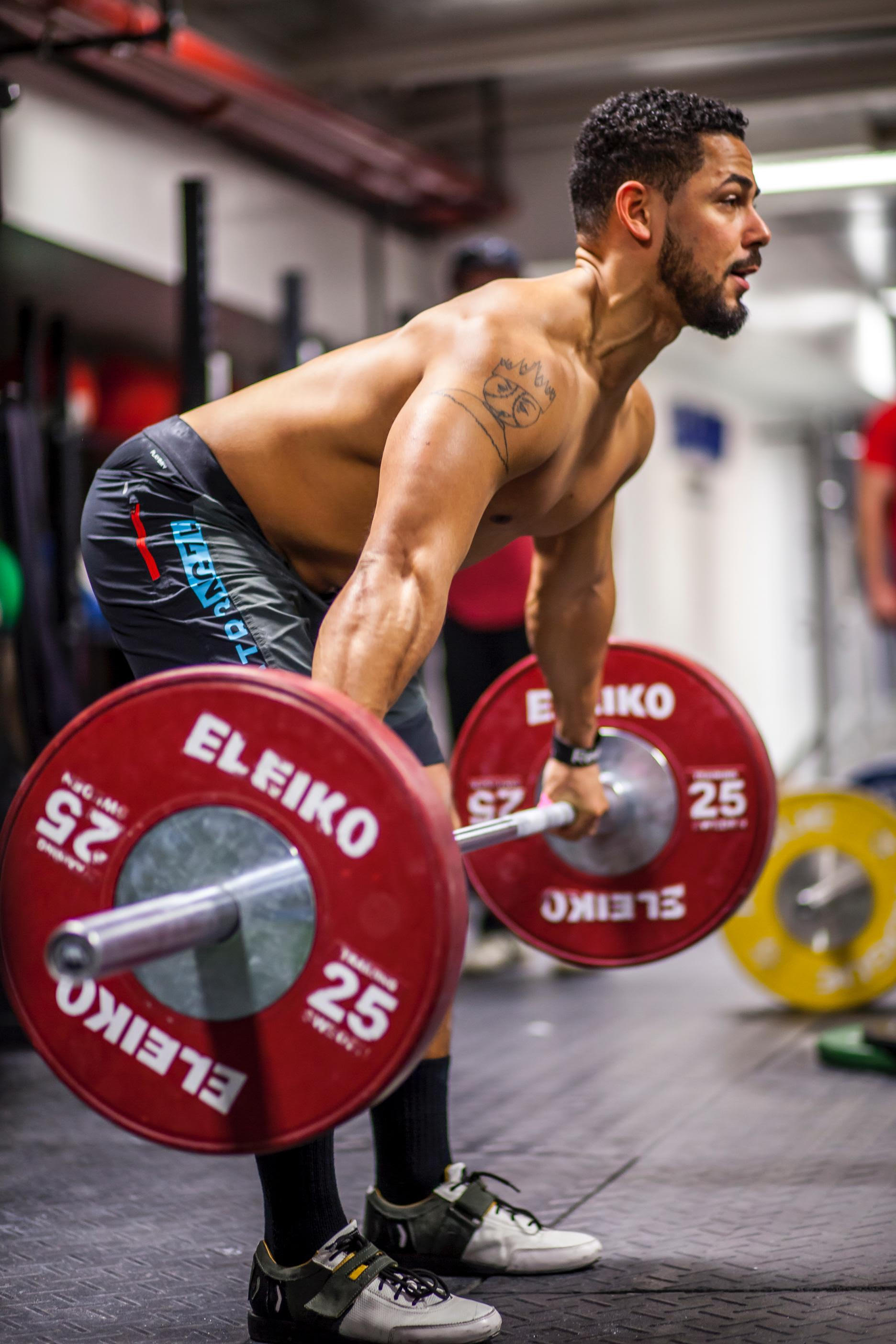
Mike Barbot
As athletes, a standard hypertrophy based program won’t do the trick. Due to the inherent demands of competitive fitness, you still need to increase your work capacity, mobility, and general athleticism. Performing hypertrophy based conditioning programs that work to develop the necessary muscle tissue and cardiovascular adaptations you need in the off-season will set you up for success the next time a competition comes your way. Below, I have detailed out two programs that I have created (one free and one paid) to deliver hypertrophy and strength results for CrossFit competitors and fitness athletes alike:
- 9-Week Strength and Hypertrophy Training Cycle (FREE): This program is a high volume based training for muscle gain and foundational strength. Additionally, the addition of olympic weightlifting movements at moderate loading is ideal for athletes looking to increase power production, technique, and barbell cycling capacity.
- LEAN STRENGTH: 8-Week Barbell Hypertrophy Program ($50): “Lean Strength” is my fully customizable 8-week training program filled with squatting, deadlifting, and pressing. The addition of an eBook training manual outlining conditioning and nutrition throughout the program is ideal for athletes looking to gain muscle and strength, lose body fat, and get better at the foundational barbell lifts.
- 8-Week Olympic Weightlifting Strength Cycle ($50): If you are looking to build a foundation for Olympic Weightlifting, become powerful, and gain lean mass in the process, then you’ll love this 8-week training program. It does not matter if you’ve competed in events using these lifts, this program has proven to develop and elevate your performance.
What’s Next?
With newly formed lean muscle, enhanced fast twitch power and force production capacities, and an unlocked athletic potential, you can resume your pre-season training regimens to prep for the upcoming competitive athletic and fitness season.
[Editors note: This article is an op-ed. The views expressed herein are the authors and don’t necessarily reflect the views of BarBend. Claims, assertions, opinions, and quotes have been sourced exclusively by the author.]
References
Erksine, R., Fletcher, G., & Folland, J. (2014). The contribution of muscle hypertrophy to strength changes following resistance training. European Journal Of Applied Physiology, 114(6), 1239-1249. Retrieved March 31, 2016, from http://www.ncbi.nlm.nih.gov/pubmed/24610245
Farup, J., Kjølhede, T., Sørensen, H., Dalgas, U., Møller, A. B., Vestergaard, P. F., . . . Vissing, K. (2012). Muscle Morphological and Strength Adaptations to Endurance Vs.
Resistance Training. Journal of Strength and Conditioning Research, 26(2), 398-407. Baechle, T., & Earle, R. (2008). Essentials of Strength Training and Conditioning(3rd ed.). Champaign, IL: Human Kinetics.
Gjovaag, T. (2008). Effect of training with different intensities and volumes on muscle fibre enzyme activity and cross sectional area in the m. triceps brachii. European Journal Of Applied Physiology, 103(4), 399-409. Retrieved March 31, 2016, from http://eds.b.ebscohost.com/eds/detail/detail?vid=3&sid=4bc98090-4b71-4c57-98c4-3940a722a5ea@sessionmgr120&hid=108&bdata=JnNpdGU9ZWRzLWxpdmU=#AN=18351376&db=mnh
Select images courtesy Lisa Haefner.
The post Why Fitness Athletes Should Focus on Hypertrophy appeared first on BarBend.
from BarBend https://barbend.com/fitness-athletes-focus-hypertrophy/
All the Current Olympic Weightlifting World Records (Infographic)
The 2016 Rio Olympics are fast approaching, and that means weightlifting is going to have its four-year shining moment in international broadcasting (or whichever parts the networks decide to air). And with every Olympic cycle comes the chance for record-breaking performances from the world’s top lifters.
We’ve put together an infographic with the current weightlifting world records, broken down by weight class and accurate as of April 1st. Check it out below.

Olympic Weightlifting World Records
A few points worth noting:
- Aleksey Lovchev has been provisionally suspended by the IWF based on a positive sample for a banned substance following the 2015 World Weightlifting Championships in Houston. However, they still list his 264 kg clean & jerk and 275 kg total as the current world records.
- Andrei Rybakou set the total record in the 85 kilo weight class at the 2008 Olympics, but he ended up with silver. Lu Yong tied Rybakou but won the competition on bodyweight; because Rybakou set the total record first during that competition, he maintains the record.
- The most recent records set were Ilya Ilyin‘s 246 kilo clean & jerk and 437 kilo total at the 2015 President’s Cup in Russia.
- Behdad Salimi will not be at the 2016 Rio Olympics to defend his 2012 gold medal; he is recovering from ACL reconstruction after a tear during a 262 kilo clean & jerk attempt.
- Yang Lian’s snatch and total records from 2006 are the oldest women’s world records still standing. Women’s weightlifting is relatively new, having only been introduced for the 2000 Olympic cycle.
- The oldest record dates back to 1998, when Zhang Yong clean & jerked 218 kilos in the 85 kilogram class. Video embedded below:
Which lifters are you most excited about seeing at the 2016 Rio Olympics? Let us know in the comments below; we’re guessing this infographic might need an update come August.
The post All the Current Olympic Weightlifting World Records (Infographic) appeared first on BarBend.
from BarBend https://barbend.com/olympic-weightlifting-world-records-infographic/